Thursday, November 29, 2012

Roy Lichtenstein, Graphic Novels, and Literacy


I recently picked up this book on Roy Lichtenstein for lesson plan inspiration. Discussing his art would be a great way to learn about pop art and the use of flat colors and ben-day dots. His style can be translated well in the art classroom, using tape to create blocks of colors and q-tips for the dots.
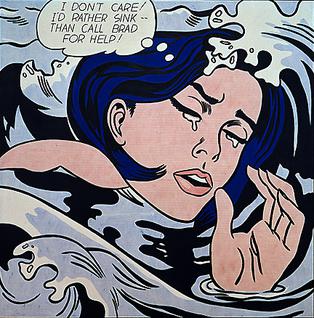
Drowning Girl 1963
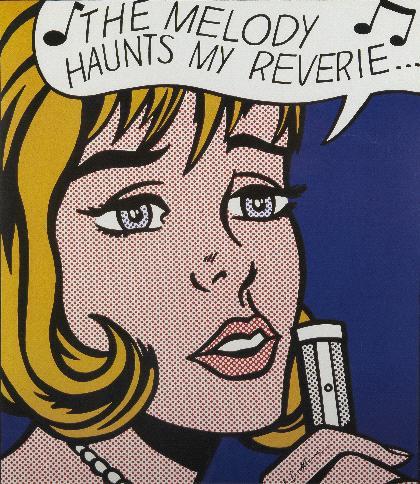
The Melody Haunts my Reverie 1965
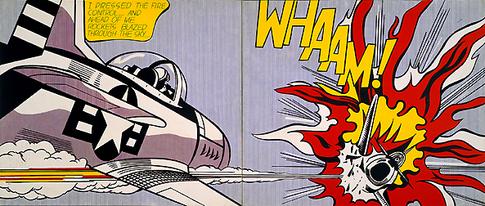
Whaam! 1963

A lot of his work contains dialogue and a narrative aspect, which connects his work to graphic novels. I think the idea of a lesson based on graphic novels fits the common core literacy standards.

Some graphic novels that I love:

If students were given the opportunity to have their art tell a story through multiple panels, it opens up a new world of possibilities in terms of communication, literacy, and context. Can't wait to try this someday!

Wednesday, November 28, 2012

Marina Abramović


Absolutely love the work of Marina Abramovic. If anyone has HBO/HBOgo please watch this documentary. A beautiful portrayal of performance art, and a great artist to think about in terms of "the gaze."


Trailer for The Artist is Present

An Artist's Life Manifesto


Fieldwork, Helen Frankenthaler, and Abstract Expressionism

Frankenthaler in 1956

My fieldwork III lesson for this semester was in a drawing and painting II class with high school students of mixed grades. It was important for me to think of a three day lesson that went with the flow of my cooperating teacher's unit so it would help students strengthen what they were already learning in the class. I learned that the students were going to begin working on paintings influenced by the abstract expressionist painter Robert Rauschenberg, who is an artist we briefly discussed in Theory and Practice.

I wanted to keep the theme of abstract expressionism, so I did a little bit of research as to other artists within this art movement. While I was doing this research, I came across a book at a yard sale called Art Effects. The book contains different effects you can create when you combine paint mediums with unconventional materials.

As a student who has her roots in photography, I am always searching for new ways to learn more about other ways to create art.
 It's amazing where you can get ideas for art lessons.

Reading this book combined with my discovery of American artist Helen Frankenthaler helped me form my lesson plan for abstract expressionist landscape paintings.

Some of Frankenthaler's landscapes:

Untitled 1984


Nature Abhors a Vacuum 1973

Southern Exposure 2005

Some of my teacher samples for the lesson:


Created with concentrated watercolor inks, wax paper, and cellophane.
My lesson explores the spontaneous, improvised, and process-oriented aspects of abstract expressionistic painting, as well as deliberate choices we can make as artists in terms of color (warm and cool), horizon line, and what the emphasis in the landscape can be. I am very excited to talk more about how it went when it comes time to present our fieldwork experiences.


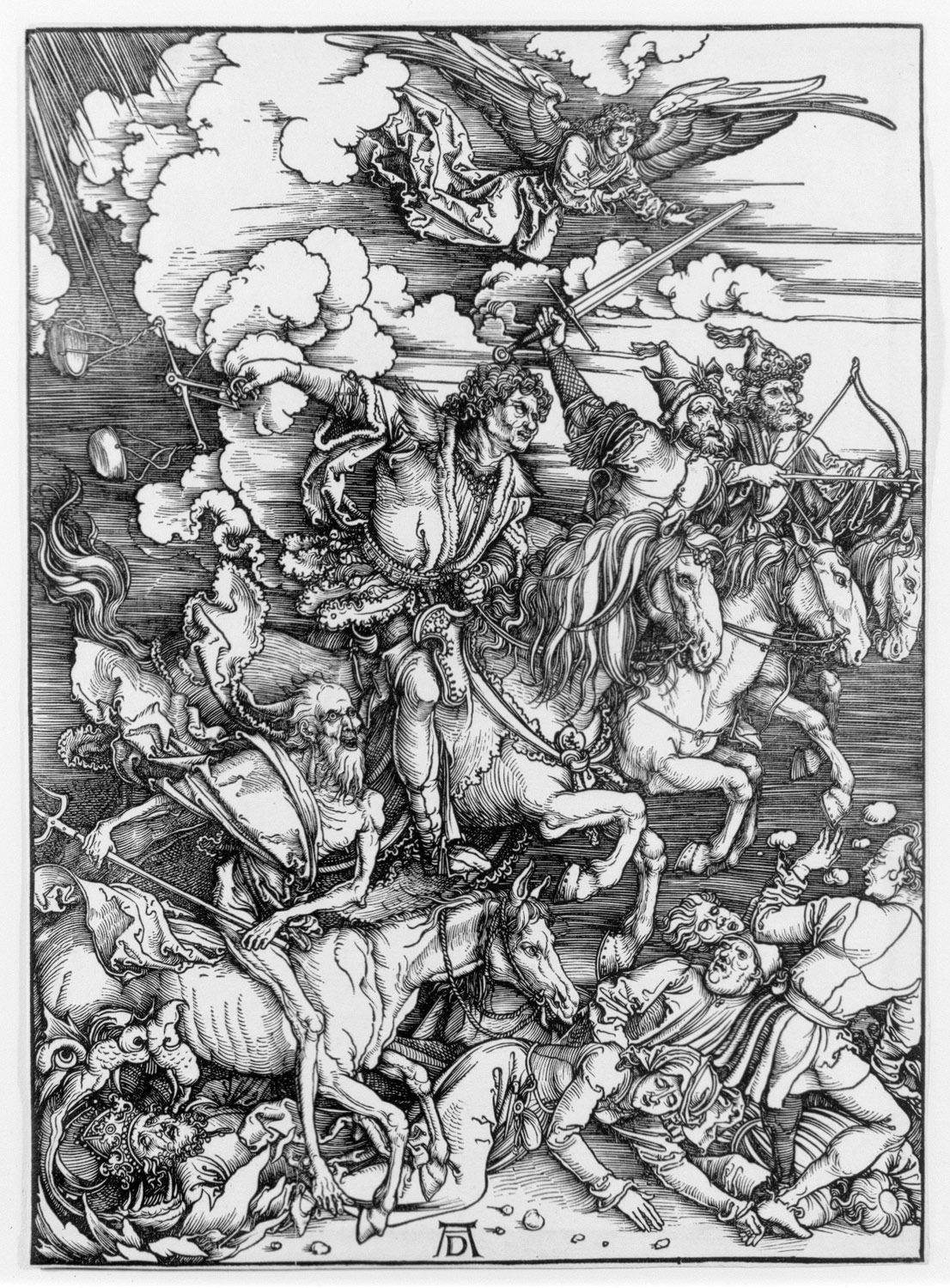
The Apocalypse

Four Horsemen of the Apocalypse ca. 1497-98
Albrecht Durer
Woodcut

The impending doom of the world is an interesting notion. It's something that has plagued the minds of humans since the beginning of civilization. It is a topic of interest to many people because it is a question that has no answer. It explores the primal nature of human beings as well as our mortality. It has been explored through many different cultures.

With that said, I think it would be interesting to explore these certain ideas in an art lesson unit, there is something to be explored that is open ended, and art can be a way to visually predict the outcomes of our temporal world.

Creating a hybrid animal with my other classmates was exciting, and allowed me to draw inspiration from life but with a fantastical twist.


Sketches for my post-apocalyptic creature

When I created something that was partially from my imagination, I was able to create a backstory for my creature. I also love when art projects coincide with or seem to roll over to other classes. I created the head with an angler fish in mind, which had to do with a super heroes/villains project I completed for my costume design class. Altering ideas and putting them in different contexts helps you grow as an artist!
Detail from my Super Villain project in Costume Design


Sunday, November 11, 2012

Transformation- Gabriel Moreno and Janine Antoni

The topic that Mikaela and I chose for our Art Education lesson unit is "Transformation." By definition, transformation means, "the operation of changing on configuration or expression into another." Transformation deals with an act, process or instance. We thought that this would be a rich topic to explore because transformation can refer to change in terms of process and use of materials, physical change, metamorphosis, emotional growth, and hybridity.

For our discussion, we chose two artists that use transformation of materials through process.

Gabriel Moreno:
http://www.gabrielmoreno.com/

Moreno illustrates, engraves, and paints his images and then works into them in Photoshop to add color and more imagery to create a sensory experience.

Janine Antoni

pbs.org-Janine Antoni

Lick and Lather
Antoni created these replicas of her face out of chocolate and soap, and used the subtractive process of licking and bathing herself with it to transform her representation of self.


There's a tension when comparing these two artists, an exploration of the transformation of materials through addition or subtraction. This is an idea that I would love to explore further in an art lesson.


Monday, November 28, 2011

Chakaia Booker

A little while back I went to the Storm King Art Center and got to view one of Chakaia Booker's sculptures titled "A Moment in Time" (2004).


Booker is a great example of an artist who uses identity in her work. She once said, "When I get up each day, I begin with myself, as far as sculpting myself."
She recycles discarded tires in her pieces in reaction to her urban hometown of northern New Jersey. In this sense, she is relating herself back to where she grew up.
Her pieces also portray aspects of black culturde-the textures, organization, and color contained in the piece are reminiscent of African-American skin. The patterns within the tire paired with the geometric loops and shapes she creates resemble traditional African scarification. Booker uses her sculpture to reference culture and tradition, both of which provokes ideas about identity.

Some of her other work:

"The Fatality of Hope"


"Phobic Digression" 2006

"Anonymity" 2007


----------------------------------

Some questions about identity:

How does tradition make me who I am?

Does the color of my skin shape or affect my identity?

Does my race make me proud of who I am?

Does the place I reside have an effect on my actions?

What textural art materials can I use to represent the person I see myself as? (soft, rough, hard, sharp,  brittle, etc.)

Thursday, November 17, 2011

This American Life

I really enjoyed listening to the middle school segment on "This American Life." I saw connections to my own experiences at that age as well as to our readings in class.

The middle school dance segment discussed the stress, uncertainty, and fear of humiliation that is brought on by this social "experiment in mini-adulthood." At this age, boys and girls are experiencing the realm of dating. According to Kerlavage, at the age of 11-13,  pre-teens and adolescents are attempting to reconcile difference in children and adult roles, which may cause great confusion and a lack of emotional control (pg. 56). As they  go through puberty, middle schoolers are starting to go on dates and see the opposite sex in a romantic way, but are unsure how to act in these new roles. This results in the fleeting relationships that so commonly occur in those years.

Kerlavage also states at this age, young people have the desire to establish their own identities (pg. 57). This was evident in the Mimi segment, where two Mexican sisters attempt to survive middle school by pretending they were from a completely different family. They dressed as if they were rich and dyed their hair blonde. They had an amazing spirit and sense of humor, and by them creating their own image (even if it was misleading) built their confidence and helped them cope with their feelings of identity.